



Introduction
As organizations increasingly rely on cloud computing, SaaS applications, and AI platforms, choosing the right architecture becomes a critical decision. One of the most important architectural considerations is whether to use a single-tenant or multi-tenant system. Both approaches have unique advantages and challenges, and the best choice depends on factors such as security requirements, scalability needs, customization demands, and budget constraints.
Understanding the differences between these two models can help businesses make informed technology decisions.
What Is a Single-Tenant System?
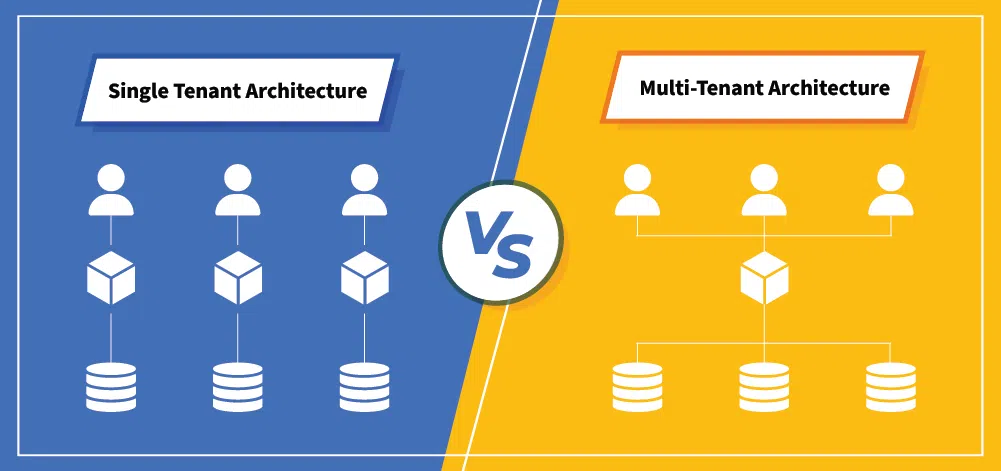
A single-tenant system provides dedicated infrastructure, resources, and application instances for one customer or organization. Each tenant operates in its own isolated environment, separate from all other users.
In a cloud environment, this might mean dedicated servers, databases, storage resources, and application deployments that are used exclusively by one organization.
Because resources are not shared, customers have greater control over configurations, performance, and security settings.
What Is a Multi-Tenant System?
A multi-tenant system allows multiple customers, known as tenants, to share the same underlying infrastructure and application instance. Although resources are shared, each tenant’s data and configurations remain logically separated.
Most modern SaaS platforms use multi-tenancy because it enables providers to serve many customers efficiently while reducing operational costs. Examples include customer relationship management systems, productivity applications, and many AI service platforms.
Key differences
1. Resource Utilization and Cost
One of the most noticeable differences between the two models is resource efficiency.
In a single-tenant environment, dedicated resources often result in higher operational costs because infrastructure may remain underutilized during periods of low demand. Organizations pay for exclusive access regardless of actual usage.
Multi-tenant systems improve resource utilization by allowing multiple customers to share computing resources. This shared approach reduces infrastructure costs and enables service providers to offer more affordable pricing.
For businesses seeking cost efficiency, multi-tenancy is often the preferred option.
2. Security and Isolation
Security is a major factor when comparing the two architectures.
Single-tenant environments offer strong isolation because no resources are shared with other organizations. This can simplify compliance efforts and reduce concerns about data exposure.
Multi-tenant systems rely on logical isolation mechanisms to keep tenant data separate. Modern cloud platforms implement sophisticated security controls, but providers must carefully manage access controls, encryption, and monitoring to prevent cross-tenant risks.
Organizations operating in highly regulated industries often favor single-tenant deployments for additional assurance.
3. Customization and Flexibility
Single-tenant systems typically offer greater customization options. Organizations can modify configurations, integrate specialized tools, and implement unique work flows without affecting other users.
In contrast, multi-tenant platforms generally maintain standardized environments. While customization is often available, providers must ensure that changes do not disrupt the shared infrastructure.
As a result, businesses with highly specific operational requirements may benefit from single tenancy.
4. Scalability and Maintenance
Multi-tenant architectures are often easier to scale because providers manage updates, infrastructure expansion, and resource allocation centrally. New customers can be added without creating entirely separate environments.
Single-tenant systems may require additional deployment and management efforts as customer environments grow. From a maintenance perspective, multi-tenancy allows software updates and feature releases to be delivered across all tenants simultaneously, reducing administrative complexity.
Conclusion
Neither model is universally better. Instead, each offers distinct advantages that align with different operational, security, and financial requirements. By carefully evaluating these factors, organizations can select an architecture that supports both their current needs and future growth.